Securing a residential property against structural degradation and biological hygiene hazards requires a systematic, scientifically executed pest control service in Silver Spring. Older wood-framed structures, finished basements, and homes bordered by dense parklands face intense seasonal pressure from subterranean termites, Norway rats, mice, and wood-boring insects.
No forms — call now for a fast, no-pressure quote.
📞 Call (227) 276-6488
A pest control service in Silver Spring is a specialized biological management and structural defense service that inspects, identifies, eliminates, and physically excludes insect and rodent populations from residential and commercial properties.
Every service reflects the same meticulous attention to detail — whether it's a single job or a larger pest control service project across Silver Spring.
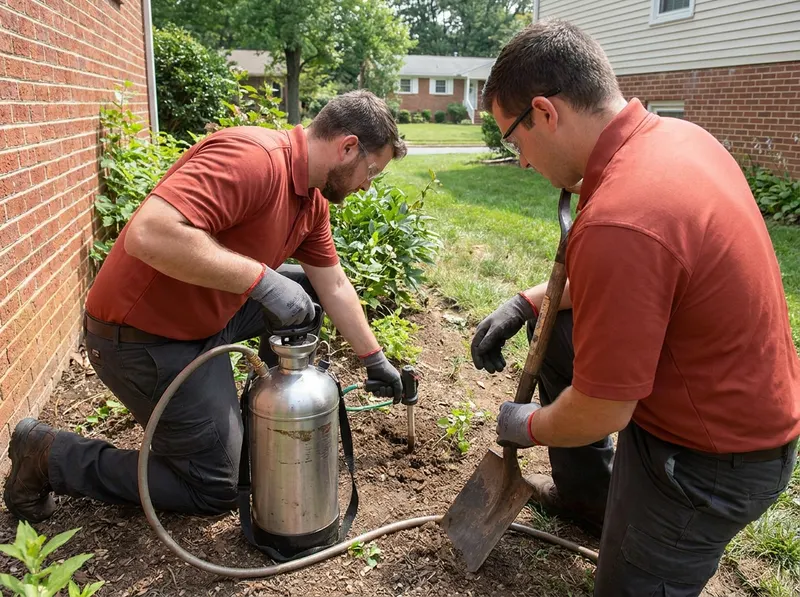
Eastern subterranean termites nest beneath the frost line in Montgomery County soil and construct exploratory mud shelter tubes over foundation masonry to access structural sill plates, floor joists, and wall studs. Treatment involves trenching soil along perimeter foundation footings, drilling expansion joints across attached concrete slabs, and applying non-repellent liquid termiticides such as fipronil. Foraging workers encounter the undetectable active ingredient and spread it throughout the subterranean colony via trophallaxis and social grooming, collapsing the reproductive queen and halting structural wood destruction within 60 to 90 days.
View details →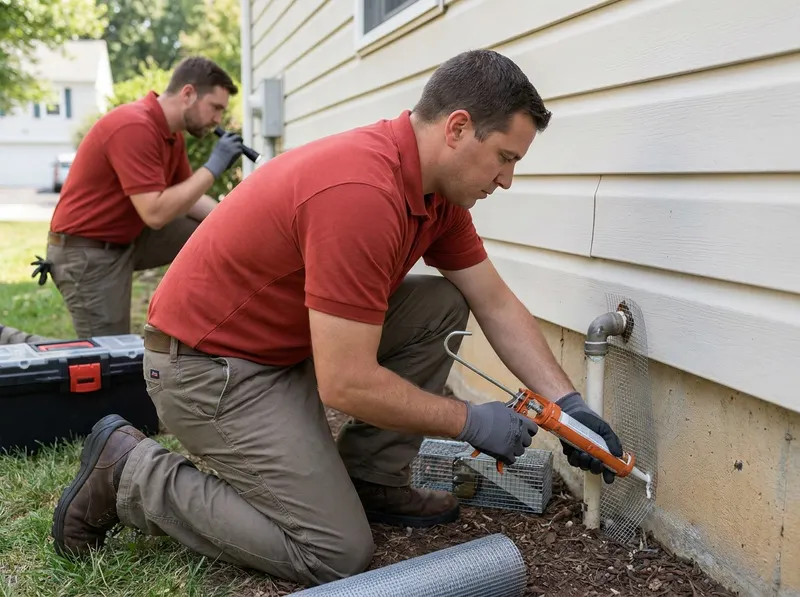
Commensal house mice and Norway rats exploit foundation gaps, rotted garage door weatherstripping, crawlspace vents, and air conditioning line-set penetrations as ambient autumn temperatures decline. Service begins with an intensive structural inspection of all basement sills, attic insulation paths, and roof transitions. Technicians deploy numbered mechanical snap-traps along verified run-lines and droppings paths inside non-living structural voids to capture existing rodents. Concurrently, all exterior openings larger than 1/4 inch are permanently sealed using heavy-gauge galvanized steel mesh, copper wire weave, and elastomeric foam sealants to establish an impenetrable physical barrier.
View details →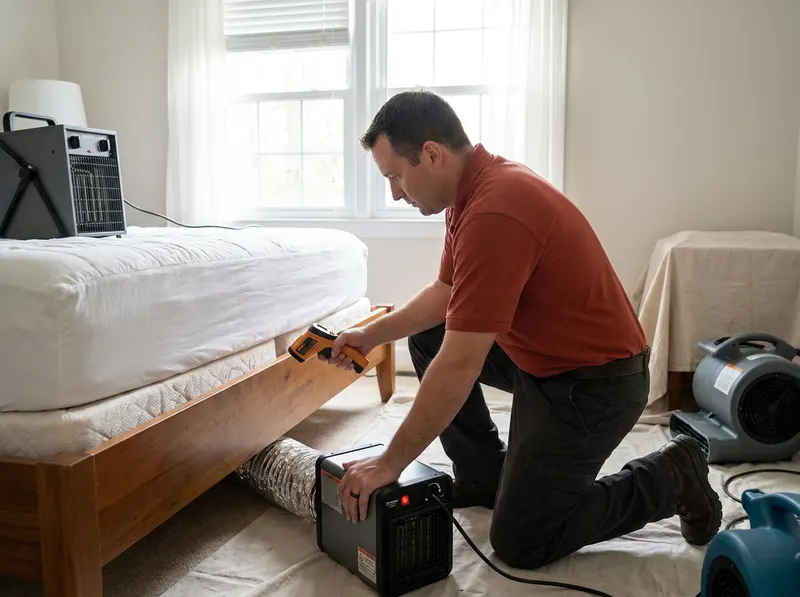
Bed bugs harbor inside mattress seams, box spring headboards, baseboard crevices, electrical outlet boxes, and upholstered furniture. Remediation combines direct high-temperature dry steam application to immediately denature insect proteins and egg capsules on contact, followed by targeted void treatments using micro-fine amorphous silica dust and synthetic pyrethroid or neonicotinoid formulations. Insect growth regulators are applied to interrupt the molting cycle of surviving nymphs. Comprehensive treatment protocols include inspecting adjacent rooms, mattress encasement installation, and secondary follow-up inspections to ensure total population eradication across all developmental stages.
View details →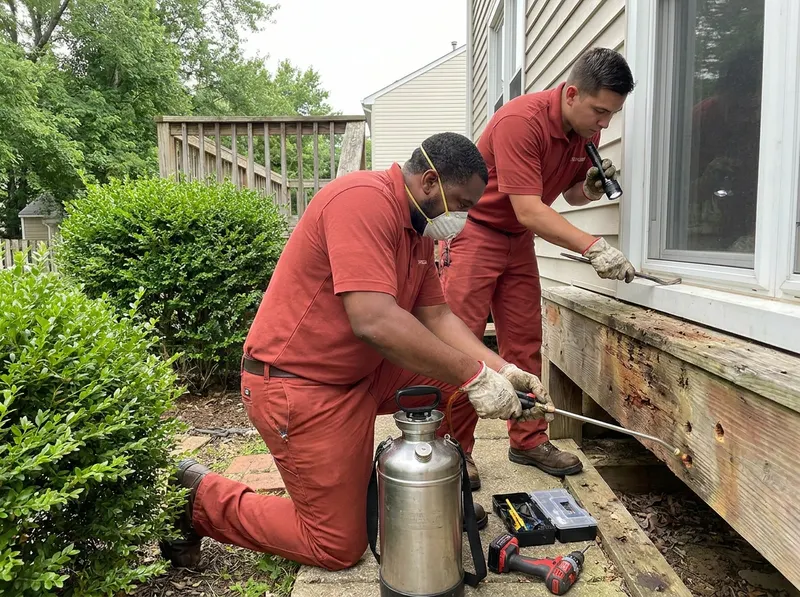
Carpenter ants excavate smooth nesting galleries inside moisture-compromised structural timbers, window headers, wall sheathing, and roof valleys rather than consuming the wood. Technicians track foraging columns back from interior moisture zones to parent outdoor colonies residing in decaying tree stumps or landscape timbers. Eradication combines targeted micro-injection of non-repellent insecticidal aerosols into active interior nesting voids with slow-acting carbohydrate and protein gel baits placed along nocturnal travel trails. This dual approach ensures foraging worker ants transport lethal active ingredients deep into the primary brood nest to eliminate the egg-laying queen.
View details →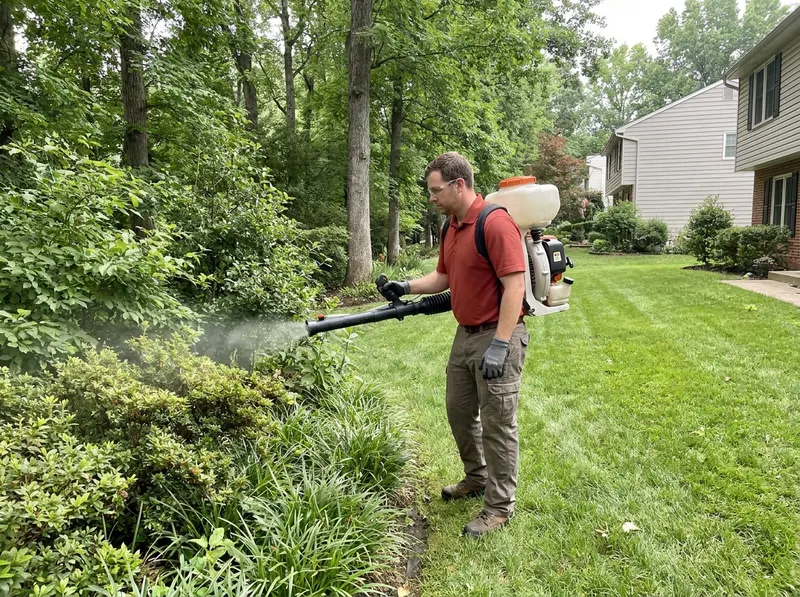
Mosquitoes and blacklegged ticks harbor in dense ornamental shrubbery, shaded property perimeters, groundcover vegetation, and leaf litter accumulation common to wooded residential parcels. Suppression protocols utilize motorized mist blowers to apply micro-encapsulated adulticides and botanical polymers to the undersides of leaves and dense foliage where adult mosquitoes rest during daylight hours. Technicians simultaneously identify and treat standing water reservoirs with natural biological larvicides containing Bacillus thuringiensis israelensis (BTI), preventing mosquito larvae from pupating without harming beneficial aquatic life, honeybees, or domestic pets.
View details →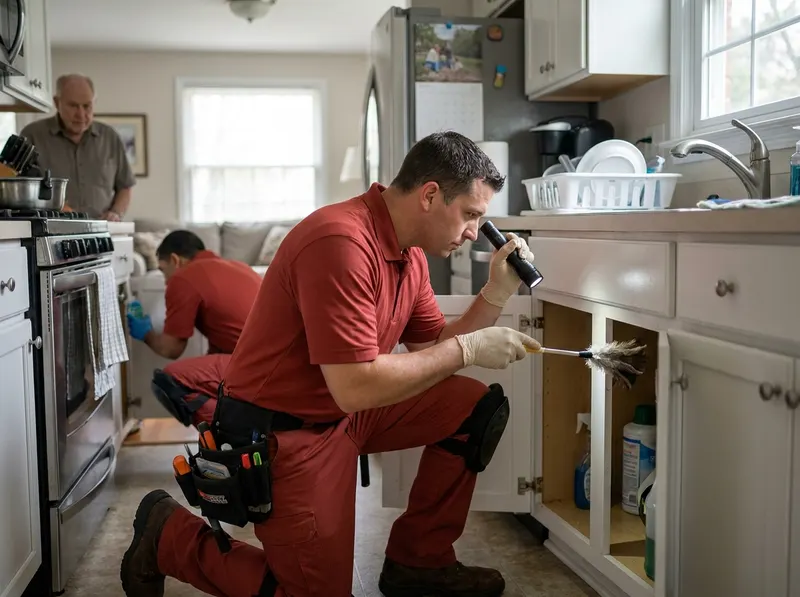
German cockroach infestations develop rapidly in kitchen galleys, bathroom utility chases, behind refrigeration compressor units, and within warm electronic housings, presenting severe asthma and sanitation hazards. Cleanout protocols utilize high-efficiency particulate air vacuuming to immediately remove aggregate adult populations and allergenic fecal matter. Technicians then apply precision matrix gel baits containing abamectin or indoxacarb directly into unexposed structural hinges, cabinet joinery, and plumbing escutcheon plates, combined with insect growth regulator discs that induce sterility in developing nymphs to permanently collapse reproductive cycles.
View details →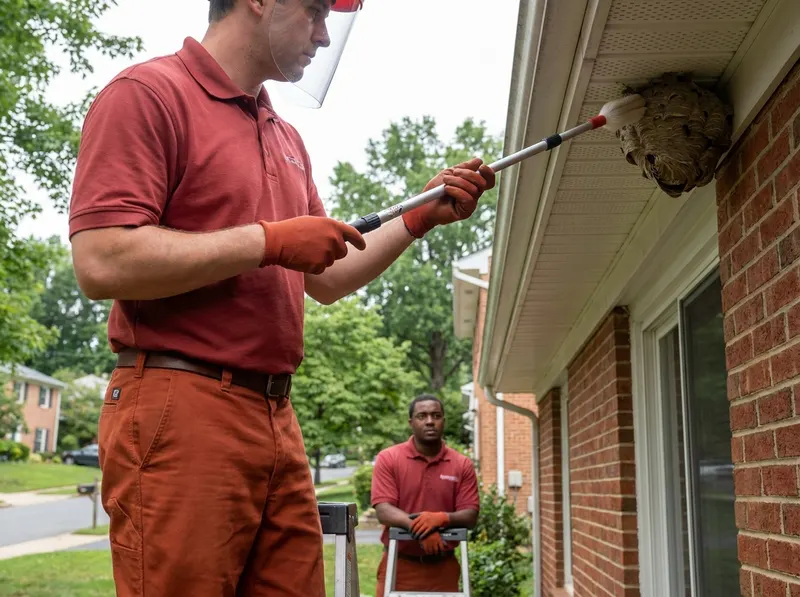
Aerial bald-faced hornets, paper wasps, and subterranean yellowjacket colonies construct aggressive nesting sites beneath roof eaves, within wall soffits, behind window shutters, and inside underground abandoned rodent burrows. Protective technicians utilize pressurized non-conductive aerosol knockdowns and localized residual insecticidal dusts applied directly into primary entry orifices. After total colony neutralization is verified, technicians physically scrape, detach, and remove the nest structure, followed by applying residual repellents to the contact surface to prevent secondary queen repopulation during late summer peak foraging.
View details →
A preventive exterior defense barrier shields indoor living spaces against seasonal biological invaders, including brown marmorated stink bugs, house centipedes, camel crickets, silverfish, and millipedes. Technicians apply a continuous three-foot vertical and three-foot horizontal residual barrier along the foundation masonry, treating accessible entry pathways around basement window wells, hose bibs, crawlspace access hatches, and exterior threshold plates. The micro-encapsulated formulation withstands rain and sunlight breakdown to intercept crawling arthropods before they establish interior overwintering harborages.
View details →A pest control service in Silver Spring is a specialized biological management and structural defense service that inspects, identifies, eliminates, and physically excludes insect and rodent populations from residential and commercial properties.
You get a firm, itemized quote for your pest control service before any work begins — no surprises, no pressure.
Careful prep, tidy work, and a full cleanup when we are done. We treat your home and belongings like our own.
The same trusted, background-checked team from the first call to the final check.
Determining the correct treatment methodology requires analyzing pest biology, nesting habits, and the physical architecture of the structure. When dealing with wood-destroying insects such as Eastern subterranean termites, homeowners must decide between non-repellent liquid soil treatments and localized baiting stations. A continuous liquid soil perimeter creates an uninterrupted treated chemical zone around the foundation footing, providing immediate colony mortality as workers transfer the termiticide through social grooming. In contrast, modular bait stations installed around the drip line require regular monitoring to intercept foraging scouts before transferring slow-acting insect growth regulators back to the central nursery. The trade-off is higher initial labor and trenching for a liquid soil treatment versus the ongoing multi-month monitoring timeline necessary for bait station matrix consumption. For active rodent infestations inside attics, finished basements, or kitchen wall chases, property owners face the choice between rodenticide bait stations and multi-catch mechanical snap-trapping combined with physical exclusion sealing. Rodenticides placed in exterior tamper-resistant stations rapidly reduce heavy exterior populations, but utilizing toxic baits indoors creates a severe risk of rodents expiring within concealed wall cavities, resulting in long-lasting foul odors, secondary fly breeding, and potential hazards to domestic pets. Mechanical snap-trapping inside interior voids provides immediate carcass recovery and verified population removal, paired with exterior copper mesh and polyurethane sealant installation. The trade-off is the intensive labor required to meticulously map and seal every 1/4-inch architectural gap along foundation transitions, rooflines, and plumbing conduits versus the risk of secondary indoor odor issues associated with poison blocks. When combating seasonal crawling insects like brown marmorated stink bugs, millipedes, and camel crickets, homeowners can select between targeted bi-annual perimeter barrier applications and year-round monthly broad-spectrum surface sprays. Bi-annual barrier treatments apply micro-encapsulated formulations to the bottom three feet of foundation masonry and window lintels right before peak spring emergence and autumn migration. The trade-off is scheduling precise calendar windows for application versus paying continuous monthly maintenance fees for chemical coverage during low-activity winter months.
Every project gets a firm, written price after a free on-site visit. Ranges below for orientation.
Tell us about your pest control service job and we'll send a clear, written quote — usually the same day. Or just call and talk to a real Silver Spring pro.
(227) 276-6488
Silver Spring properties face intense, localized biological pressures due to the extensive urban tree canopy, dense stream valleys flanking the Sligo Creek Trail, and diverse architectural inventory spanning historic wood-framed homes in Woodside to mid-century brick ramblers in Four Corners and Woodmoor. High summer humidity across Montgomery County saturates clay-rich soils, accelerating Eastern subterranean termite activity near untreated basement sills and creating ideal breeding grounds for mosquitoes and biting ticks in shaded residential backyards near Brookside Gardens and Jesup Blair Park. As autumn temperatures drop, Norway rats and field mice migrate rapidly from public park boundaries and commercial corridors along Georgia Avenue, Colesville Road, and the Silver Spring Civic Building toward residential crawlspaces, stone foundation rubble walls, and detached garages. Effective pest management in this geographic corridor demands specialized knowledge of local soil density, architectural vulnerabilities in older Montgomery County housing stock, and species-specific exclusion rather than generic surface chemical sprays.
Free estimates for Silver Spring & the surrounding area.
 Montaro Pest Control